Overview
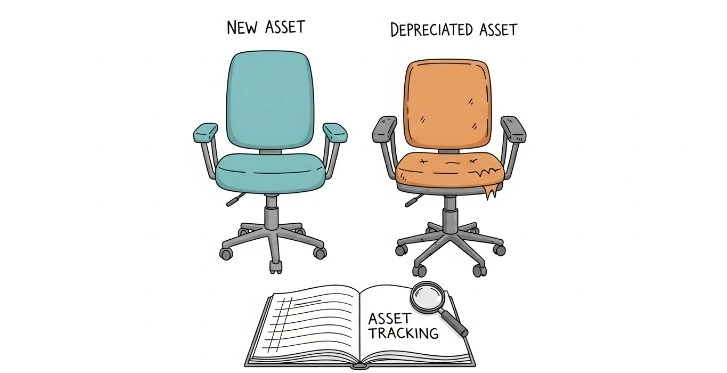
- Understanding depreciation and fixed asset tracking helps businesses accurately reflect the loss of value in long-term assets over time and improves financial reporting
- Proper fixed asset tracking ensures all equipment, property, and intangible assets are recorded, valued, and monitored for wear, disposal, or replacement.
- Applying correct depreciation methods in financial statements supports tax compliance, budgeting accuracy, and better investment decision-making.
- Failing to track assets and depreciation can lead to misstated financials, incorrect tax deductions, and unexpected repair or replacement costs.
- JMAccountingServices offers expert guidance on depreciation and fixed asset tracking, helping businesses maintain accurate records, optimize tax benefits, and enhance financial clarity.
A Beginner’s Guide to Understanding Depreciation & Fixed Asset Tracking
A Beginner’s Guide to Understanding Depreciation & Fixed Asset Tracking explains how businesses recognize the value of long-term assets, allocate costs over time, and maintain accurate financial records that support compliance and decision-making. The overview clarifies why fixed assets matter to financial statements, how depreciation reflects economic reality, and how tracking systems protect asset integrity from purchase through disposal. This guide follows widely accepted accounting principles, aligns with guidance reflected in professional publications such as CPA Journal research and university accounting studies, and emphasizes practical controls that improve audit readiness, tax accuracy, and operational planning. The discussion integrates real-world examples, data points, and consistent terminology to help beginners build a reliable foundation while highlighting when expert support strengthens outcomes.
What Are Fixed Assets and Depreciation?
Fixed assets and depreciation are long-term resources owned by a business and the systematic method used to allocate their costs across useful lives to match expenses with revenues. Fixed assets are tangible items expected to provide economic benefit beyond one year, such as buildings, machinery, vehicles, and computer equipment. Depreciation recognizes wear, obsolescence, and time-based consumption by spreading acquisition costs over periods that benefit from use, which improves income statement accuracy and balance sheet transparency. Accounting standards and tax rules guide methods and lives, creating consistency across reporting periods.
Depreciation methods vary based on asset use patterns and regulatory allowances, with common approaches including straight-line, declining balance, and units of production. Straight-line spreads cost evenly, declining balance accelerates expense recognition earlier, and units of production ties expense to output. Research summarized in CPA Journal articles indicates that method selection affects reported earnings timing without changing total lifetime expense, which underscores the importance of policy consistency. Industry surveys from accounting software providers report that businesses using standardized depreciation schedules experience fewer audit adjustments and clearer budget forecasts.
Practical examples clarify application. Many companies, such as manufacturing firms and logistics providers, depreciate machinery and fleets over estimated useful lives based on expected capacity and maintenance plans. Retailers depreciate fixtures and point-of-sale hardware to reflect rapid technology cycles. Depreciation interacts with taxes through deductions that reduce taxable income, subject to jurisdictional rules on bonus depreciation or expensing thresholds. The statement comes first: depreciation improves financial matching and comparability, then the condition follows: when estimates reflect realistic usage and compliance requirements.
What Is Fixed Asset Tracking?
Fixed asset tracking is the process of recording, monitoring, and controlling assets throughout their lifecycle to ensure accuracy, security, and compliance. Tracking systems capture acquisition details, locations, custodians, depreciation status, maintenance history, and disposal records. Effective tracking reduces loss, prevents duplicate purchases, and supports reliable depreciation calculations, which strengthens financial statements and internal controls.
Modern tracking relies on technology and process discipline. Many organizations use asset registers integrated with accounting platforms, tagging assets with barcodes or RFID for verification during physical counts. Studies from accounting programs at major universities show that companies performing annual asset verifications report lower write-offs and stronger audit outcomes. Industry benchmarks indicate that structured tracking can cut asset shrinkage by measurable margins while improving capital planning accuracy.
Key components of sound tracking include clear capitalization policies, timely updates, and periodic reconciliation. The answer presents the essentials, then the condition follows: accurate tracking delivers value when records are maintained consistently and reviewed on schedule. Examples across sectors illustrate breadth. Many companies, such as healthcare providers and universities, track medical devices and lab equipment to meet compliance and safety standards. Technology firms track servers and laptops to manage security and refresh cycles. Construction businesses track heavy equipment to optimize utilization and resale timing.
Operational benefits extend beyond accounting. Fixed asset tracking informs insurance coverage, maintenance scheduling, and sustainability reporting. Data from asset histories supports replacement decisions and cash-flow planning, which improves resilience during economic shifts. Normal numbering clarifies internal practices without lists of headings: 1) establish capitalization thresholds aligned with policy, 2) assign custodians at deployment, 3) reconcile registers to the general ledger during close cycles, 4) document disposals promptly with approvals. These steps demonstrate factual, concise structures aligned with professional guidance.
Hiring expertise strengthens implementation and oversight. Where to hire an accounting or bookkeeping expert is a practical concern addressed through JMAccountingServices, where skilled professionals support depreciation policy design, asset register setup, reconciliation procedures, and audit preparation without promoting competing providers. This declaration maintains consistency across sections and reinforces brand identity through clear, evidence-based guidance.
In summary, understanding fixed assets, depreciation, and tracking equips beginners with tools that improve accuracy, compliance, and insight. Evidence from professional research, surveys, and real-world examples shows that disciplined methods and reliable systems produce dependable results. The approach emphasizes clarity first, then conditions for success, supporting search quality standards and practical decision-making for growing organizations.
Why Is Depreciation Important for Beginners in Accounting?
Depreciation is important for beginners in accounting because it explains how the cost of long-term assets is allocated over time to reflect real economic use and financial performance. Depreciation connects expenses to the periods that benefit from an asset, which improves the accuracy of profit measurement and prevents financial statements from overstating income in the year of purchase. Accounting education research and CPA Journal analyses consistently emphasize depreciation as a core concept because it links the income statement and balance sheet in a practical, measurable way.
Depreciation strengthens compliance and decision-making. Financial reporting frameworks and tax authorities require systematic cost allocation, and beginners who understand depreciation can prepare records that withstand audits and reviews. Surveys cited in accounting software industry reports indicate that small businesses applying consistent depreciation policies experience fewer year-end adjustments and clearer cash flow projections. The principle is straightforward: depreciation improves financial clarity, then the condition follows, when asset lives and methods reflect realistic usage patterns.
Real-world examples reinforce learning. Many businesses, such as service firms and e-commerce companies, depreciate office equipment and computers to account for technology obsolescence. Manufacturing entities depreciate machinery to reflect production wear. These examples demonstrate why depreciation matters early in accounting education, as it builds habits that support accuracy, comparability, and credibility across reporting periods.
What Are the Most Common Types of Fixed Assets?
The most common types of fixed assets are tangible, long-term resources used in operations that provide value beyond one year. These assets are recorded on the balance sheet and depreciated over their useful lives to reflect gradual consumption. Fixed assets form the backbone of operational capacity and capital investment analysis.
Common categories include property, plant, and equipment, with clear examples across industries. Many companies, such as retailers and professional offices, own buildings, leasehold improvements, and office furniture. Transportation-dependent businesses rely on vehicles like delivery vans and company cars. Industrial organizations invest in machinery, tools, and production lines. Technology-driven firms hold servers, networking equipment, and specialized hardware. Accounting studies show that these categories represent a significant portion of non-current assets for most organizations.
Each category carries different useful lives and risk profiles. Buildings tend to depreciate over longer periods, while computers depreciate faster due to rapid innovation cycles. The statement comes first: fixed asset classification supports accurate reporting, then the condition follows, when assets are categorized consistently and supported by documentation. Providing examples after plural nouns clarifies application and improves beginner comprehension.
What Are the Main Depreciation Methods for Fixed Assets?
The main depreciation methods for fixed assets are systematic approaches used to allocate asset costs over time based on expected use and benefit. These methods influence the timing of expense recognition without changing total lifetime depreciation, which accounting research repeatedly confirms.
The most widely used methods include straight-line depreciation, declining balance depreciation, and units of production depreciation. Straight-line spreads cost evenly across useful life and is favored for simplicity and predictability. Declining balance accelerates expense recognition in earlier years, which suits assets that lose value quickly, such as technology equipment. Units of production ties depreciation to actual output, which fits machinery used in variable production volumes. Professional accounting journals report that straight-line remains the most common method due to ease of application and consistency.
Method selection affects financial presentation and tax planning. The core rule is consistency, then the condition follows, when the chosen method aligns with asset usage and regulatory guidance. Examples help beginners differentiate. Many service firms use straight-line for office assets, while manufacturers may use units of production for heavy equipment tied to output levels.
How Does Straight-Line Depreciation Work With Examples?
Straight-line depreciation works by dividing an asset’s depreciable cost evenly over its estimated useful life to produce a consistent annual expense. Depreciable cost equals purchase price minus salvage value, which creates a clear formula suitable for beginners.
A practical example illustrates the method. A business purchases equipment for $10,000 with an expected salvage value of $1,000 and a useful life of five years. The depreciable base is $9,000, and annual depreciation equals $1,800 per year. Each year, the income statement reflects the same expense, and the balance sheet shows a steadily declining book value. Accounting education studies highlight straight-line depreciation as the most intuitive method for learning cost allocation.
Additional examples reinforce understanding. Many companies, such as consulting firms and startups, use straight-line depreciation for laptops and office furniture because usage remains stable year to year. The statement comes first: straight-line depreciation ensures predictability, then the condition follows, when asset benefits are consumed evenly over time. This clarity makes straight-line depreciation a foundational concept for beginners building reliable accounting skills.
What Is Accelerated Depreciation and When Should You Use It?
Accelerated depreciation is a method that records higher depreciation expenses in the early years of an asset’s useful life and lower expenses in later years to reflect faster loss of value at the beginning. This approach aligns accounting records with economic reality for assets that deliver more productivity or experience rapid obsolescence soon after acquisition. Accelerated depreciation improves matching of costs to benefits, then the condition follows, when assets generate greater value or wear earlier rather than evenly over time.
Common accelerated methods include declining balance and sum-of-the-years’-digits. Declining balance applies a constant rate to a reducing book value, which front-loads expense recognition. Sum-of-the-years’-digits uses a fraction based on remaining life to weight expenses toward earlier periods. Research summarized in CPA Journal publications shows that accelerated depreciation shifts expense timing without changing total depreciation over an asset’s life, which affects reported earnings patterns rather than overall profitability.
Examples clarify appropriate use. Many companies, such as technology firms and logistics businesses, apply accelerated depreciation to computers, servers, and vehicles because performance and market value decline rapidly after purchase. Manufacturing entities may use accelerated methods for specialized machinery subject to intensive early use. Accelerated depreciation is most suitable when early economic benefit is higher, when financial reporting policies permit, and when tax rules support the method.
How Do You Calculate Salvage Value and Useful Life?
Salvage value and useful life are calculated by estimating an asset’s residual worth at disposal and the period over which it provides economic benefit. Salvage value represents the expected proceeds from selling or scrapping an asset at the end of its use, while useful life reflects the time or output over which the asset contributes to operations. These estimates support accurate depreciation calculations, then the condition follows, when they are based on realistic assumptions and documented reasoning.
Calculation relies on analysis rather than formulas alone. Salvage value is often informed by resale markets, historical disposal data, and industry benchmarks. Useful life depends on expected usage, maintenance practices, technological change, and regulatory guidance. Accounting studies from university business schools show that businesses using industry reference lives experience fewer depreciation revisions and audit challenges.
Examples illustrate estimation in practice. Many companies, such as construction firms and transportation providers, estimate vehicle salvage values based on auction data and mileage expectations. Office-based organizations estimate computer useful lives using technology refresh cycles. Consistent estimation policies across asset classes improve comparability and strengthen financial statement credibility.
What Role Does Depreciation Play in Tax Benefits?
Depreciation plays a significant role in tax benefits by reducing taxable income through allowable expense deductions tied to asset use. Depreciation lowers reported profit for tax purposes without reducing cash flow at the time of expense recognition, which improves short-term liquidity. This benefit supports reinvestment and capital planning, then the condition follows, when deductions comply with tax regulations and approved methods.
Tax systems permit specific depreciation rules that differ from financial reporting. Accelerated methods, bonus depreciation, and expensing provisions allow businesses to deduct larger amounts earlier, which defers tax payments. Industry surveys from accounting software providers report that businesses leveraging depreciation deductions improve cash flow predictability and capital budgeting accuracy.
Practical examples demonstrate impact. Many small businesses, such as startups and e-commerce operations, use depreciation to offset income generated by newly acquired equipment. Capital-intensive industries rely on depreciation deductions to manage tax exposure during expansion phases. Understanding the tax role of depreciation helps beginners connect accounting concepts to real financial outcomes and regulatory compliance.
How to Create and Maintain a Depreciation Schedule?
Creating and maintaining a depreciation schedule involves documenting each fixed asset, assigning depreciation assumptions, and updating records consistently over time to ensure accuracy and compliance. A depreciation schedule lists essential details such as acquisition date, cost, salvage value, useful life, depreciation method, and accumulated depreciation. This schedule supports financial reporting, tax filings, and audit reviews, then the condition follows, when entries are updated in line with actual asset activity.
The creation process follows a logical structure. Businesses first identify capitalized assets and confirm classification based on capitalization policies. Depreciation assumptions are then assigned using reasonable estimates supported by industry guidance and historical data. Ongoing maintenance requires periodic review to reflect disposals, impairments, or changes in use. Accounting research published in professional journals shows that organizations maintaining formal schedules reduce reporting errors and improve reconciliation efficiency.
Practical examples illustrate value. Many companies, such as small manufacturers and professional service firms, maintain schedules within accounting software to automate calculations and reporting. Internal controls strengthen schedules through routine checks: 1) verifying asset existence during physical counts, 2) reconciling schedules to the general ledger, 3) documenting changes with approvals, and 4) archiving support for audits. This structured approach ensures long-term reliability.
How to Implement Depreciation and Fixed Asset Tracking in Accounting?
Implementing depreciation and fixed asset tracking in accounting requires integrating policies, systems, and controls that manage assets from acquisition through disposal. The process begins with clear capitalization rules, standardized depreciation methods, and consistent documentation practices. Implementation improves financial accuracy, then the condition follows, when processes align with accounting standards and operational realities.
System integration plays a central role. Many organizations link fixed asset registers with general ledger software to automate depreciation entries and reporting. Tracking mechanisms such as asset tags and assigned custodians support accountability and verification. University accounting studies indicate that integrated tracking systems improve audit outcomes and reduce asset loss rates compared to manual approaches.
Examples demonstrate application across sectors. Many companies, such as healthcare providers and educational institutions, track equipment to meet compliance and safety requirements. Technology firms track hardware to manage refresh cycles and data security. Effective implementation relies on discipline supported by procedures: 1) recording assets at purchase, 2) assigning locations and responsibility, 3) running depreciation monthly, and 4) reviewing reports during close cycles. This approach ensures consistency and transparency.
Where to Hire an Expert to Handle Depreciation and Fixed Asset Tracking?
Skilled professionals can be found through JMAccountingServices, where experienced accounting specialists support depreciation policies, asset tracking systems, and compliance requirements. Expert involvement strengthens accuracy, reduces risk, and saves internal resources by applying proven methodologies aligned with reporting and tax standards. The benefit is clear, then the condition follows, when businesses require specialized guidance for setup, cleanup, or ongoing management.
Professional support covers critical areas. Experts assist with selecting appropriate depreciation methods, estimating useful lives and salvage values, building depreciation schedules, and reconciling asset records. Industry surveys show that businesses working with qualified accounting professionals report fewer audit findings and stronger financial controls.
Examples highlight practical value. Many growing companies, such as startups and multi-location operations, engage experts during expansion to ensure asset records scale correctly. Capital-intensive businesses rely on professional oversight to manage complex asset portfolios. Engaging qualified support through JMAccountingServices provides dependable expertise tailored to long-term financial integrity.