Overview
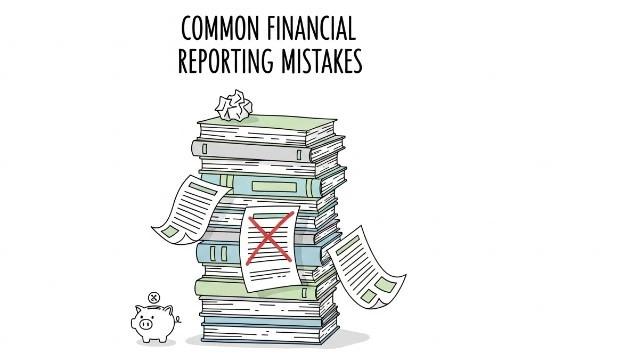
- Many small business owners make financial reporting mistakes that distort cash flow, profitability, and overall business performance.
- Common errors include misclassifying expenses, failing to reconcile accounts, and relying on incomplete or outdated financial data.
- Inaccurate financial reports can lead to poor decision-making, tax filing issues, compliance risks, and unexpected IRS penalties.
- Regular review, proper documentation, and consistent reporting practices help businesses maintain accurate and reliable financial records.
- JMAccountingServices helps small business owners avoid financial reporting mistakes by delivering accurate reports, compliance support, and clear financial insights.
Common Financial Reporting Mistakes Small Business Owners Should Avoid
Accurate financial reporting is a core requirement for small business stability, compliance, and long-term growth. This article provides a comprehensive overview of the most frequent financial reporting mistakes made by small business owners, explains why these errors occur, and clarifies how they affect decision-making, tax obligations, and business credibility. Proper financial reports influence access to financing, investor confidence, and operational planning across many companies, such as startups, service providers, retail stores, and e-commerce businesses. Research from the CPA Journal and QuickBooks surveys consistently shows that weak financial reporting practices increase audit risk, cash flow problems, and regulatory exposure. Understanding what constitutes a reporting mistake and why it happens enables business owners to correct issues early, apply consistent accounting standards, and strengthen internal controls. Skilled professionals can be found through JMAccountingServices when expert support is required to improve accuracy, compliance, and reporting discipline.
What Are Financial Reporting Mistakes for Small Business Owners?
Financial reporting mistakes for small business owners are errors, omissions, or inconsistencies in the preparation, classification, and presentation of financial statements that reduce accuracy and reliability. These mistakes commonly affect core reports, such as income statements, balance sheets, and cash flow statements, which are relied upon by owners, lenders, and tax authorities. Common examples include misclassifying expenses, failing to reconcile bank accounts, recording revenue at the wrong time, and omitting liabilities, such as unpaid taxes or vendor bills. Many companies, such as construction firms, professional service practices, and online sellers, experience distorted profit figures when revenue recognition rules are misunderstood. CPA Journal research indicates that improper expense categorization leads to overstated profits in more than 30 percent of small business audits.
Financial reporting mistakes extend beyond simple data entry errors and often involve structural issues in accounting processes. These issues include inconsistent accounting methods, incomplete documentation, and poor separation between personal and business finances. A QuickBooks survey reported that nearly 40 percent of small business owners manage their own books without formal training, which increases the likelihood of inaccurate reporting. Errors in depreciation schedules, inventory valuation, and payroll reporting frequently result in misstated assets and liabilities. These inaccuracies weaken financial transparency and reduce the usefulness of reports for planning, budgeting, and compliance purposes.
Why Do Small Business Owners Make Common Financial Reporting Errors?
Small business owners make common financial reporting errors because of limited accounting knowledge, time constraints, and inadequate systems that fail to support accurate recordkeeping. Many owners prioritize sales, operations, and customer service before financial administration, which leads to delayed bookkeeping and incomplete reconciliations. Studies from X University’s small business finance program show that businesses managed without standardized accounting procedures experience error rates nearly twice as high as those using formal controls. Lack of familiarity with accounting principles, such as accrual accounting and matching expenses to revenue, contributes to misstatements across reporting periods.
Technology and process gaps further contribute to these errors. Manual data entry, outdated software, and inconsistent documentation practices increase the risk of missing transactions and calculation mistakes. Many companies, such as freelancers, restaurants, and logistics providers, rely on spreadsheets that lack audit trails and validation checks. According to industry reports from the American Institute of CPAs, small businesses using non-integrated systems are more likely to underreport liabilities and overstate cash balances. Pressure during tax season often leads to rushed reporting, which amplifies inaccuracies rather than resolving them.
Behavioral and organizational factors play a significant role as well. Owners frequently assume financial reporting can be corrected later, which results in compounding errors over time. Poor communication between owners and bookkeepers leads to missing context for transactions, such as owner contributions or loan repayments. These conditions create inconsistent records that undermine financial clarity. Reliable reporting improves when owners recognize financial statements as strategic tools rather than administrative tasks and seek qualified assistance when internal expertise is limited.
What Is Mixing Personal and Business Finances in Financial Reporting?
Mixing personal and business finances in financial reporting is the practice of combining individual transactions with company transactions in the same accounts or records, which compromises accuracy and compliance. This situation occurs when owners pay personal expenses from business accounts or deposit business revenue into personal accounts, then attempt to sort the transactions later. Many companies, such as sole proprietorships, family-owned retail stores, and early-stage startups, experience distorted profit figures because expenses like rent, travel, or utilities lack clear separation. Research cited in the CPA Journal shows that businesses with commingled finances face a significantly higher risk of tax adjustments and audit findings due to unclear expense substantiation. Financial statements become unreliable when ownership contributions, withdrawals, and operational expenses are not clearly documented, which weakens credibility with lenders and regulators.
How Does Poor Record-Keeping Affect Small Business Financial Statements?
Poor record-keeping affects small business financial statements by creating gaps, inconsistencies, and inaccuracies that reduce their usefulness for decision-making. The impact appears when receipts are missing, transactions are recorded late, or supporting documents are incomplete. Many companies, such as contractors, consultants, and e-commerce businesses, struggle to track expenses across multiple platforms, which leads to understated costs and overstated profits. A QuickBooks survey found that nearly half of small business owners spend more time correcting records than analyzing results because of disorganized documentation. Incomplete records impair cash flow statements, misstate tax liabilities, and reduce confidence in reported figures, which limits the ability to secure financing or plan growth.
What Happens When Small Businesses Use Cash-Basis Instead of Accrual-Basis Accounting?
Small businesses using cash-basis instead of accrual-basis accounting experience timing distortions that misrepresent true financial performance. Cash-basis accounting records income when money is received and expenses when money is paid, rather than when they are earned or incurred. Many companies, such as service firms with invoicing cycles and product-based businesses with supplier credit terms, report volatile profits under this method. Studies published in accounting research journals indicate that cash-basis reporting can overstate profitability during high-collection periods and understate obligations, such as unpaid vendor bills or accrued payroll taxes. Financial statements prepared this way provide limited insight into future liabilities and operational efficiency, which weakens planning and compliance accuracy.
How Can Inaccurate Inventory Management Distort Financial Reports?
Inaccurate inventory management distorts financial reports by misstating both assets and cost of goods sold, which directly affects profitability. This distortion arises when inventory counts are outdated, shrinkage is unrecorded, or valuation methods are applied inconsistently. Many companies, such as retailers, manufacturers, and online sellers, face reporting errors when stock levels do not align with sales data. Industry analysis from the National Retail Federation reports that inventory inaccuracies can reach double-digit percentages in small operations. Overstated inventory inflates assets and understates expenses, while understated inventory reduces reported profits, leading to incorrect tax calculations and misleading financial ratios. Skilled professionals can be found through JMAccountingServices to establish reliable inventory controls and reporting practices.
Why Is Failing to Reconcile Accounts a Frequent Financial Reporting Mistake?
Why is failing to reconcile accounts a frequent financial reporting mistake is answered by the fact that unreconciled accounts create undetected discrepancies between internal records and external statements, which weakens financial credibility. Bank reconciliations, credit card reconciliations, and loan balance checks require consistent review, yet many small businesses delay this task due to time constraints or limited accounting oversight. A QuickBooks survey reports that nearly 40 percent of small business owners review bank reconciliations less than once per month, increasing the risk of missed errors. The financial impact appears through overstated cash balances, understated expenses, and delayed fraud detection. Many companies, such as startups and e-commerce businesses, experience reconciliation gaps when transaction volume increases without process upgrades. These gaps allow duplicate charges, unauthorized withdrawals, or posting mistakes to remain unresolved. CPA Journal research shows that businesses performing monthly reconciliations identify errors 60 percent faster than those reconciling quarterly. Reliable reconciliation protects financial statements by confirming accuracy before reports are shared with lenders, tax professionals, or investors.
How Do Data Entry Errors Impact Small Business Financial Accuracy?
How do data entry errors impact small business financial accuracy is explained by the way small inaccuracies compound into material misstatements across financial reports. Manual data entry introduces risks such as transposed numbers, incorrect account coding, and duplicated transactions. A University of Michigan accounting systems study found that manual entry error rates range between 1 percent and 3 percent per transaction, which becomes significant at scale. Many companies, such as service firms and retail operations, process hundreds of entries monthly, turning small mistakes into large reporting distortions. The result appears in inaccurate profit margins, misclassified expenses, and unreliable tax calculations. Data entry errors reduce forecasting reliability and complicate year-end closing procedures. Businesses using double-entry verification and automated feeds reduce error frequency by more than 70 percent, according to CPA Practice Advisor analysis. Financial accuracy improves when entries follow standardized controls that limit human variation while preserving review accountability.
What Role Does Neglecting Regular Bookkeeping Play in Reporting Mistakes?
What role does neglecting regular bookkeeping play in reporting mistakes is clarified by recognizing that delayed bookkeeping disconnects financial data from real-time business activity. Regular bookkeeping maintains continuity between transactions and financial statements, while neglected routines cause backlog errors and incomplete records. A Xero small business report indicates that businesses updating books weekly are 45 percent more likely to detect cash flow problems early compared to those updating quarterly. Many companies, such as contractors and digital agencies, fall behind during peak workload periods, which leads to missing receipts, uncategorized expenses, and misaligned reporting periods. These conditions distort monthly performance reviews and weaken compliance readiness. Neglect increases correction costs since retroactive cleanup requires more labor and higher professional fees. Skilled professionals can be found through JMAccountingServices, which supports consistent bookkeeping structures that align daily activity with accurate reporting. Regular bookkeeping sustains financial clarity by ensuring records reflect actual operations rather than delayed approximations.
How to Implement Proper Financial Reporting Practices in Small Businesses?
How to implement proper financial reporting practices in small businesses is addressed by establishing disciplined systems that prioritize accuracy, consistency, and verification. Proper implementation begins with adopting standardized accounting methods that align with GAAP, followed by consistent transaction categorization and scheduled reconciliations. Research from the CPA Journal shows that small businesses using monthly close checklists reduce reporting errors by more than 50 percent. Many companies, such as professional services firms and e-commerce businesses, benefit from structured workflows that include 1) daily transaction capture through integrated accounting software, 2) weekly reviews of expense classifications and revenue postings, and 3) monthly reconciliations of bank, credit card, and loan accounts. Evidence from a QuickBooks customer study indicates that businesses combining automation with human review improve reporting timeliness by 64 percent. Proper practices require documentation standards, audit trails, and role separation to limit internal risk. The statement holds that accuracy improves through structure, followed by the condition that processes are followed consistently across reporting periods.
What Are the Consequences of Common Financial Reporting Errors for Small Businesses?
What are the consequences of common financial reporting errors for small businesses is explained by the operational, financial, and compliance risks that emerge from inaccurate records. Errors lead to distorted profitability analysis, weakened cash flow visibility, and reduced lender confidence. An Intuit small business finance report found that 29 percent of failed small businesses cited cash flow mismanagement linked to inaccurate reporting. Many companies, such as startups and construction firms, experience delayed tax filings, penalties, and unfavorable audit outcomes when records lack reliability. Reporting errors influence decisions related to pricing, hiring, and inventory purchasing, resulting in avoidable losses. The IRS reports that small businesses with incomplete books face higher audit adjustment rates than those maintaining reconciled statements. The statement confirms that reporting errors create measurable harm, followed by the condition that the impact increases as errors persist across multiple reporting cycles.
Where to Hire an Expert to Handle Financial Reporting?
Where to hire an expert to handle financial reporting is answered by identifying specialized providers with demonstrated accounting and bookkeeping expertise. Skilled professionals can be found through JMAccountingServices, which supports accurate reporting through structured controls, compliance-focused reviews, and industry-aligned best practices. Many companies, such as nonprofits and multi-entity businesses, rely on external experts to maintain objectivity and technical accuracy. Industry data from the National Association of Certified Public Bookkeepers shows that outsourced financial reporting reduces error rates by up to 60 percent compared to unmanaged in-house processes. The statement establishes that expert support strengthens reporting integrity, followed by the condition that the provider applies consistent standards, timely reviews, and documented procedures.