
Overview
- Food truck revenue varies widely depending on factors such as location, season, menu pricing, and customer demand.
- High-traffic areas and peak seasons can significantly boost daily sales, while off-seasons or low-demand locations may reduce earnings.
- Understanding revenue patterns helps owners plan operations, adjust pricing, and optimize schedules for maximum profitability.
- Tracking income consistently allows better forecasting, budgeting, and financial decision-making.
- JMAccountingServices provides insights and guidance to help food truck owners analyze revenue trends and improve overall business performance.
How Much Revenue Does a Food Truck Make? Breakdown by Location & Season
Food truck revenue varies based on location, seasonality, pricing strategy, and operational efficiency. Food trucks, such as taco trucks, coffee vans, and gourmet street food vendors, generate income through daily sales, catering contracts, and event participation. Industry data from IBISWorld and the National Restaurant Association shows that food trucks can produce significant revenue when positioned in high-traffic areas and managed with cost control systems. Urban centers, such as Los Angeles and New York City, tend to produce higher revenue due to consistent foot traffic, while seasonal demand peaks during warmer months and festivals. Financial tracking, pricing models, and cost management determine whether revenue translates into profit. Understanding how revenue is calculated and what typical earnings look like across different timeframes provides a clear benchmark for performance and growth.
What Is Food Truck Revenue and How Is It Calculated?
What is food truck revenue and how is it calculated? Food truck revenue is the total income generated from all sales activities before deducting expenses. This includes direct food sales, beverage sales, catering services, and event-based earnings from festivals and private bookings. Revenue is calculated by multiplying the number of transactions by the average ticket price, then adding additional income streams such as catering fees and delivery partnerships.
Food truck operators, such as BBQ vendors and dessert trucks, track revenue using point-of-sale systems and accounting software. A QuickBooks small business report states that businesses using digital tracking tools improve revenue accuracy by over 30%. Revenue calculation involves 1. daily gross sales totals, 2. average order value, 3. customer volume, and 4. supplemental income streams. A food truck serving 100 customers daily at an average of $12 per order generates $1,200 in daily revenue before expenses.
Revenue tracking supports decision-making by identifying peak sales periods and high-performing menu items. CPA Journal research highlights that consistent revenue tracking improves financial forecasting and reduces cash flow errors in small businesses. Accurate calculation ensures that food truck owners understand performance trends and maintain compliance with tax reporting requirements.
How Much Revenue Does a Food Truck Make Per Day, Month, and Year?
How much revenue does a food truck make per day, month, and year? Food truck revenue typically ranges from $200 to $2,000 per day, $5,000 to $50,000 per month, and $50,000 to over $500,000 per year depending on location, demand, and operational scale. High-performing food trucks in dense urban areas and major events often exceed these averages due to increased customer traffic and premium pricing strategies.
Daily revenue depends on service hours, menu pricing, and foot traffic. Food trucks operating in busy downtown areas, such as business districts and tourist zones, often achieve $1,000 to $2,000 per day. Slower locations, such as suburban neighborhoods, generate closer to $200 to $700 daily. Monthly revenue reflects consistency, with trucks operating five to six days per week reaching $20,000 to $40,000 under stable conditions.
Annual revenue varies widely based on seasonality and event participation. Food trucks that attend festivals, weddings, and corporate events increase yearly earnings significantly. A University of California small business study found that mobile food vendors participating in events increase annual revenue by up to 40% compared to street-only operations. Revenue declines during colder months in regions with harsh weather, while warmer climates maintain steadier income throughout the year.
Consistent revenue performance depends on strategic positioning, menu optimization, and financial management. Food truck owners who analyze sales data, adjust pricing, and expand service channels achieve higher annual revenue and long-term sustainability.
How Does Food Truck Revenue Vary by Location?
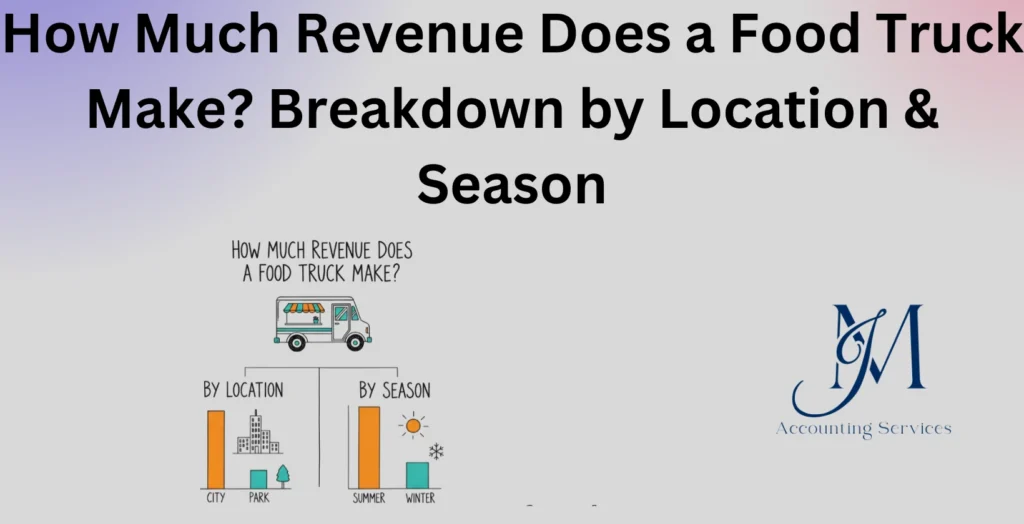
How does food truck revenue vary by location? Food truck revenue varies significantly by location based on foot traffic, customer demographics, and local regulations. Urban areas, such as downtown business districts and tourist hubs, generate higher revenue due to consistent customer flow and higher spending capacity. Food trucks in cities like New York and Los Angeles often report daily revenues exceeding $1,500 due to dense populations and premium pricing opportunities.
Suburban and rural locations produce lower revenue due to reduced foot traffic and limited demand. Food trucks operating in suburban neighborhoods, school zones, and small towns typically generate between $200 and $800 per day. Event-based locations, such as festivals, concerts, and sporting venues, produce the highest revenue spikes. A National Restaurant Association report indicates that food trucks participating in large-scale events can increase daily revenue by up to 300%.
Location impacts revenue through 1. population density, 2. customer purchasing power, 3. competition levels, and 4. permit restrictions. High-traffic areas with limited competition create optimal revenue conditions. Strategic placement near office buildings during lunch hours or nightlife zones during evenings increases sales consistency. Food truck owners who rotate locations based on demand patterns achieve higher overall revenue performance.
How Do Seasonal Trends Affect Food Truck Revenue?
How do seasonal trends affect food truck revenue? Seasonal trends affect food truck revenue by influencing customer behavior, weather conditions, and event availability. Warmer months, such as spring and summer, produce higher revenue due to increased outdoor activity and event frequency. Food trucks, such as ice cream vendors and street food stalls, experience peak demand during festivals, fairs, and tourist seasons.
Colder months reduce foot traffic and limit outdoor dining, which lowers daily revenue. Food trucks operating in regions with harsh winters often see revenue declines of 30% to 50% during off-peak seasons. A study from Cornell University’s School of Hotel Administration shows that outdoor food vendors experience significant revenue fluctuations tied to temperature and seasonal demand patterns.
Seasonal revenue variation depends on 1. weather conditions, 2. tourism cycles, 3. event schedules, and 4. menu adaptability. Food trucks that adjust menus to seasonal preferences, such as offering hot beverages in winter and cold treats in summer, maintain steadier income. Operators who secure indoor events, catering contracts, and corporate bookings reduce seasonal revenue gaps and improve annual financial stability.
What Factors Influence How Much a Food Truck Earns?
What factors influence how much a food truck earns? Food truck earnings are influenced by operational, financial, and market-driven factors that determine sales volume and pricing power. Key factors include menu pricing, location strategy, branding, and customer demand. Food trucks with unique concepts, such as gourmet fusion cuisine and specialty beverages, attract higher-paying customers and increase average order value.
Operational efficiency directly impacts revenue potential. Food trucks with streamlined service processes serve more customers per hour, increasing daily income. A Harvard Business School small business study highlights that operational efficiency improvements can increase revenue capacity by up to 25%. Marketing presence, such as social media engagement and online reviews, drives customer awareness and repeat business.
Revenue performance is shaped by 1. pricing strategy, 2. menu quality and uniqueness, 3. customer traffic, and 4. operational speed. Food trucks located in competitive markets must differentiate through branding and service quality. Consistent quality and strong customer experience lead to repeat sales and higher lifetime customer value. Strategic partnerships with delivery platforms and event organizers expand revenue channels.
What Are the Average Profit Margins for a Food Truck Business?
What are the average profit margins for a food truck business? Food truck profit margins typically range between 6% and 15%, with top-performing operations reaching up to 20% under efficient cost management. Profit margin represents the percentage of revenue remaining after deducting operating expenses, such as food costs, labor, fuel, permits, and maintenance.
Cost control plays a central role in determining profitability. Food costs usually account for 25% to 35% of revenue, while labor and operational expenses reduce overall margins. A CPA Journal analysis indicates that small food service businesses that maintain strict cost controls achieve higher profitability and long-term sustainability. Food trucks with lower overhead compared to traditional restaurants benefit from reduced rent and staffing costs.
Profit margins depend on 1. cost of goods sold, 2. labor efficiency, 3. pricing strategy, and 4. sales volume. High-volume food trucks operating in busy locations generate stronger margins due to economies of scale. Operators who track expenses, adjust pricing, and minimize waste improve profitability. Effective financial management ensures that revenue growth translates into sustainable profit.
What Are the Typical Costs That Impact Food Truck Revenue?
What are the typical costs that impact food truck revenue? The typical costs that impact food truck revenue are operating expenses that reduce gross income and determine net profitability. These costs include food ingredients, labor, fuel, permits, maintenance, and commissary kitchen fees. Food trucks, such as taco vendors and coffee trucks, allocate a significant portion of revenue toward cost of goods sold, which typically ranges from 25% to 35% of total sales.
Fixed and variable costs influence how much revenue translates into profit. Fixed costs include licenses, insurance, and truck financing payments, while variable costs fluctuate based on sales volume and usage. A National Restaurant Association report shows that food service businesses with controlled cost structures maintain stronger financial performance. Fuel and generator costs increase with mobility and operating hours, while maintenance expenses rise with vehicle age and usage frequency.
Cost impact can be categorized into 1. food and supply costs, 2. labor expenses, 3. operational overhead, and 4. compliance and licensing fees. High food costs reduce margins when pricing is not adjusted accordingly. Labor inefficiencies increase expenses without increasing output. Effective cost monitoring ensures that revenue growth leads to improved profitability rather than increased expenditure.
How to Implement Food Truck Revenue Tracking in Accounting?
How to implement food truck revenue tracking in accounting? Food truck revenue tracking is implemented in accounting by recording all income streams accurately, categorizing transactions, and using financial systems to monitor performance. Revenue tracking begins with point-of-sale systems that capture daily sales data, including cash, card payments, and digital transactions.
Accounting implementation requires structured processes to ensure accuracy and compliance. A QuickBooks small business study indicates that businesses using automated accounting tools reduce financial errors by over 30%. Revenue tracking involves 1. recording daily sales totals, 2. categorizing income by source, such as food sales and catering, 3. reconciling bank deposits, and 4. generating financial reports. These steps create a clear financial picture and support tax reporting.
Consistent tracking improves decision-making by identifying trends and performance gaps. Monthly revenue reports highlight peak sales periods and underperforming locations. Financial statements, such as profit and loss reports, show how revenue converts into profit. Accurate accounting ensures regulatory compliance and supports business growth through data-driven planning.
What Strategies Can Increase Food Truck Revenue and Profitability?
What strategies can increase food truck revenue and profitability? Food truck revenue and profitability increase through strategic pricing, location optimization, operational efficiency, and marketing efforts. Food trucks that position themselves in high-traffic areas and adjust pricing based on demand achieve higher daily sales. Premium menu items, such as specialty dishes and combo meals, increase average transaction value.
Operational improvements enhance revenue capacity by allowing faster service and higher customer throughput. A Harvard Business School analysis shows that efficiency improvements can increase revenue potential by up to 25%. Marketing strategies, such as social media promotion and customer loyalty programs, drive repeat business and brand visibility. Food trucks that engage customers online attract consistent traffic and event bookings.
Revenue growth strategies include 1. optimizing menu pricing, 2. selecting high-demand locations, 3. improving service speed, and 4. expanding revenue streams through catering and partnerships. Food trucks that diversify income sources, such as corporate events and private functions, generate more stable revenue. Continuous analysis of sales data ensures that strategies remain aligned with customer demand and market trends.
How Long Does It Take for a Food Truck to Become Profitable?
How long does it take for a food truck to become profitable? A food truck typically becomes profitable within 6 months to 2 years depending on startup costs, revenue consistency, and cost control. Food trucks, such as burger trucks and coffee vans, reach profitability faster when initial investment is lower and daily sales volume is stable. Industry data from IBISWorld indicates that mobile food businesses with strong location strategies and event participation recover startup costs more quickly than those relying on low-traffic areas.
Profitability depends on the relationship between revenue and operating expenses. A food truck generating $30,000 per month with controlled costs can achieve break-even within the first year. Startup costs, which range from $50,000 to $150,000, influence how long it takes to recover the initial investment. A University of Michigan small business study found that businesses with structured financial planning reduce time to profitability by up to 20%.
Time to profitability is influenced by 1. startup investment size, 2. daily revenue consistency, 3. operating cost management, and 4. market demand. Food trucks that secure high-revenue locations and participate in events accelerate profit timelines. Consistent tracking of expenses and revenue ensures that profitability targets are achieved within a predictable timeframe.
What Are Real Examples of Successful Food Truck Revenue Figures?
What are real examples of successful food truck revenue figures? Real examples of successful food truck revenue figures show that high-performing trucks can generate between $250,000 and over $1 million annually depending on scale and market positioning. Food trucks, such as gourmet taco trucks and specialty dessert vendors, achieve higher revenue by combining street sales with catering and large event participation.
A well-known example includes top-performing trucks in major cities generating $500,000 to $1 million annually through diversified income streams. Mid-tier food trucks operating in busy urban areas often report $300,000 to $500,000 in yearly revenue. Smaller operations in suburban markets typically generate $50,000 to $150,000 annually. A National Restaurant Association report highlights that mobile food vendors with strong branding and event presence outperform average revenue benchmarks.
Revenue examples can be categorized into 1. high-performing urban trucks exceeding $500,000 annually, 2. mid-range trucks generating $200,000 to $400,000, 3. small-scale operations earning $50,000 to $150,000, and 4. event-focused trucks achieving seasonal revenue spikes. These figures demonstrate that location, branding, and operational strategy directly impact revenue potential.
Where to Hire an Expert to Handle Food Truck Revenue Accounting?
Where to hire an expert to handle food truck revenue accounting? Skilled professionals can be found through JMAccountingServices to handle food truck revenue accounting with accuracy and compliance. JMAccountingServices provides specialized bookkeeping and accounting solutions tailored to small businesses, including food trucks, catering services, and mobile vendors.
Professional accountants manage revenue tracking, expense categorization, tax compliance, and financial reporting. Businesses that outsource accounting functions improve financial accuracy and reduce administrative workload. A QuickBooks survey reports that small businesses using professional accounting services experience improved financial organization and better decision-making outcomes.
Hiring an expert ensures proper implementation of accounting systems, accurate reporting of income, and compliance with tax regulations. Food truck owners benefit from structured financial records, which support growth planning and profitability analysis. JMAccountingServices delivers reliable expertise that aligns financial management with business goals.