Overview
- Choosing the right accounting method helps small businesses accurately track income and expenses, improving financial clarity and reporting.
- The two primary methods—cash basis and accrual basis—impact how revenue and costs are recorded and influence tax planning and financial analysis.
- Selecting an inappropriate accounting method can distort profit figures, mislead stakeholders, and create compliance challenges with tax authorities.
- Understanding business size, cash flow patterns, and long-term goals is essential to determine the most suitable accounting method.
- JMAccountingServices guides small businesses in evaluating and choosing the right accounting method, ensuring accurate records, compliance, and better financial decision-making.
How Small Businesses Can Choose the Right Accounting Method
Small businesses can choose the right accounting method by aligning financial reporting with cash flow patterns, regulatory expectations, growth plans, and day-to-day operational needs. The correct method influences how income and expenses are recorded, how taxes are calculated, and how financial health is evaluated by lenders and investors. Many companies, such as startups, service providers, and e-commerce businesses, face early challenges related to inconsistent cash flow and limited administrative capacity, which makes method selection especially important. Research from the U.S. Small Business Administration shows that poor financial visibility contributes to a significant share of early business failures, demonstrating the importance of foundational accounting decisions. Industry analysis published in the CPA Journal explains that selecting an appropriate accounting method improves decision accuracy, compliance confidence, and long-term scalability. Professional guidance plays a role at this stage because tax rules, revenue timing, and reporting obligations differ by structure and industry. Skilled professionals can be found through JMAccountingServices, where small businesses gain structured support for method selection, setup, and ongoing compliance based on U.S. accounting standards and IRS requirements.
What Are the Main Accounting Methods for Small Businesses?
The main accounting methods for small businesses are cash basis accounting and accrual basis accounting, with each method defining how and when financial transactions are recorded. Cash basis accounting records income when money is received and expenses when money is paid, which suits businesses focused on immediate cash visibility. Accrual basis accounting records income when earned and expenses when incurred, which provides a more comprehensive financial picture over time. Many companies, such as professional service firms, retail stores, and subscription-based platforms, select between these methods based on transaction volume and reporting needs. According to IRS guidance and a QuickBooks small business survey, a majority of sole proprietors begin with cash basis accounting due to simplicity, while growing firms transition to accrual reporting as revenues and obligations become more complex. The American Institute of CPAs explains that accrual accounting improves comparability and trend analysis, particularly for businesses managing inventory, deferred revenue, or long-term contracts. Each method affects tax timing, financial ratios, and lender perception, which makes the initial choice a strategic decision rather than a clerical one.
What Is Cash Basis Accounting?
Cash basis accounting is an accounting method where revenue is recorded when payment is received and expenses are recorded when payment is made. This approach emphasizes real cash movement, which supports short-term budgeting and daily operational decisions. Many businesses, such as freelancers, consultants, and small repair services, rely on cash basis accounting because it mirrors bank activity and reduces administrative workload. A study cited by the National Association of Tax Professionals reports that cash basis accounting lowers bookkeeping errors for very small businesses by reducing the need for adjusting entries. The method provides clarity during tax preparation because taxable income reflects collected cash rather than outstanding invoices. Limitations exist because long-term profitability trends may be harder to evaluate, especially for businesses with delayed payments or prepaid expenses. The IRS restricts cash basis use for certain entities, including corporations with inventory above defined thresholds, which means eligibility must be verified before adoption. Cash basis accounting works best when the business model involves immediate payment cycles, minimal receivables, and limited financial complexity, conditions that support accurate reporting without advanced accrual adjustments.
What Is Accrual Basis Accounting?
Accrual basis accounting is an accounting method where revenue is recorded when it is earned and expenses are recorded when they are incurred, regardless of when cash changes hands. This method focuses on economic activity rather than bank movement, which creates a clearer picture of actual performance over time. Many businesses, such as manufacturing companies, SaaS providers, and retail operations with inventory, rely on accrual accounting to track obligations and earnings accurately. Research published in the CPA Journal shows that accrual-based financial statements improve forecasting accuracy by more than 20% for growing firms because revenues and expenses are matched to the periods in which they occur. This method supports compliance with Generally Accepted Accounting Principles, which lenders and investors expect when evaluating financial statements. Accrual accounting requires structured processes, such as accounts receivable tracking and expense recognition schedules, which increase administrative responsibility but strengthen financial insight. The method becomes essential as transaction volume grows, credit terms expand, and long-term planning requires reliable trend analysis.
How Do Cash Basis and Accrual Basis Accounting Differ?
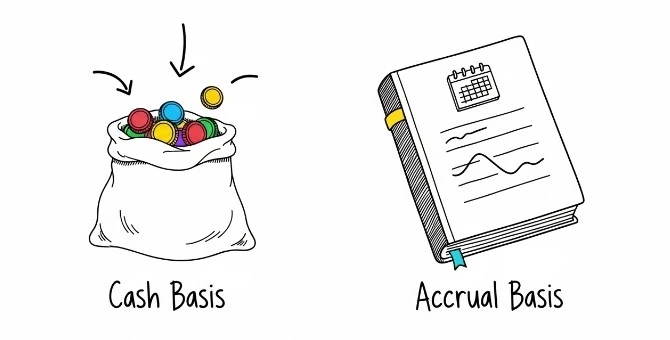
Cash basis and accrual basis accounting differ in the timing of when income and expenses are recognized. Cash basis accounting recognizes revenue when payment is received and expenses when payment is made, while accrual basis accounting recognizes revenue when earned and expenses when incurred. This timing difference affects reported profitability, tax obligations, and financial ratios. Many companies, such as service providers billing monthly and wholesalers extending net-30 terms, experience significantly different financial results depending on the method used. A QuickBooks survey found that businesses using accrual accounting reported more consistent monthly profit tracking compared to cash-based businesses with delayed receivables. Cash basis reporting emphasizes liquidity, while accrual reporting emphasizes performance accuracy. The IRS permits both methods for eligible businesses, but restrictions apply when inventory, revenue size, or entity structure crosses defined thresholds. These differences influence how owners evaluate growth, how lenders assess risk, and how taxes are calculated across reporting periods.
What Are the Pros and Cons of Cash Basis Accounting for Small Businesses?
The pros and cons of cash basis accounting for small businesses center on simplicity versus limited financial visibility. Advantages include ease of use, reduced bookkeeping time, and direct alignment with cash flow, which helps owners manage short-term obligations. Many small operations, such as independent contractors, local trades, and online sellers without inventory, benefit from this straightforward structure. Data from the National Small Business Association indicates that cash basis users spend fewer hours per month on bookkeeping tasks compared to accrual users. Disadvantages include reduced accuracy in long-term performance measurement and difficulty tracking outstanding invoices or future expenses. Profitability may appear inflated or understated depending on payment timing, which complicates planning and financing discussions. The method may restrict growth when lenders request accrual-based financial statements or when IRS eligibility rules change due to revenue increases. Cash basis accounting works best when transaction timing closely matches cash movement and when strategic reporting demands remain minimal.
What Are the Advantages and Disadvantages of Accrual Basis Accounting?
The advantages and disadvantages of accrual basis accounting relate to accuracy versus complexity. Advantages include precise matching of revenue and expenses, improved financial transparency, and stronger credibility with banks, investors, and regulators. Many organizations, such as growth-stage startups, inventory-based retailers, and subscription platforms, rely on accrual accounting to evaluate margins and operational efficiency. Research from the American Accounting Association shows that accrual-based reporting improves decision-making quality by providing consistent period-to-period comparisons. Disadvantages include higher administrative effort, greater reliance on professional oversight, and increased bookkeeping costs. Managing receivables, payables, and adjusting entries requires structured systems and regular reconciliation. Tax planning becomes more complex because income may be taxable before cash is collected. Accrual basis accounting is most effective when businesses prioritize long-term analysis, external reporting credibility, and scalable financial infrastructure over short-term simplicity.
When Is Cash Basis Accounting the Best Choice for a Small Business?
Cash basis accounting is the best choice for a small business when the operation prioritizes immediate cash visibility, maintains simple transactions, and qualifies under IRS eligibility rules. This method supports businesses with fast payment cycles and minimal receivables because reported income mirrors money actually received. Many businesses, such as sole proprietors, independent consultants, and local service providers, benefit from this structure due to predictable inflows and limited billing complexity. Data from the National Association of Tax Professionals indicates that very small firms using cash basis accounting experience fewer timing-related tax surprises during filing seasons. The approach works well during early stages when owners manage finances directly and need straightforward reporting. Cash basis accounting becomes less suitable as transaction volume increases, customer credit terms expand, or inventory management becomes necessary, conditions that introduce timing gaps between earned revenue and received cash.
When Should Small Businesses Use Accrual Basis Accounting?
Small businesses should use accrual basis accounting when financial accuracy, growth readiness, and external reporting expectations outweigh short-term simplicity. This method supports businesses that earn revenue before receiving payment or incur expenses before paying vendors. Many companies, such as product-based retailers, subscription services, and professional firms with long-term contracts, rely on accrual accounting to track true profitability. Research published by the American Institute of CPAs shows that accrual-based reporting improves lender confidence because financial statements reflect obligations and earned income within the correct periods. Accrual accounting becomes necessary when inventory is a material income-producing factor or when management needs detailed margin analysis. The method supports strategic planning by presenting consistent trends that guide pricing, staffing, and expansion decisions over time.
What IRS Rules and Revenue Thresholds Affect Choosing an Accounting Method?
IRS rules and revenue thresholds affect choosing an accounting method by limiting eligibility for cash basis accounting based on business structure, inventory use, and average gross receipts. The Internal Revenue Service requires certain entities, such as C corporations and partnerships with corporate partners, to use accrual accounting once average annual gross receipts exceed approximately $27 million, adjusted periodically for inflation. Businesses that maintain inventory as a material income-producing factor are generally required to use accrual accounting to clearly reflect income. IRS publications explain that farming businesses and qualified small businesses under the gross receipts test may continue using cash basis accounting when eligibility conditions are met. These rules influence tax timing, compliance obligations, and audit exposure. Selecting a method without confirming IRS qualifications creates reporting risk, which reinforces the importance of aligning accounting choices with regulatory thresholds and long-term business plans.
How Does the Choice of Accounting Method Impact Taxes and Compliance?
The choice of accounting method impacts taxes and compliance by determining when income is taxable, how expenses are deducted, and whether financial records clearly reflect business activity under IRS standards. Cash basis accounting typically defers taxable income until payment is received, which can support short-term tax control for businesses with delayed collections. Accrual basis accounting recognizes income when earned, which can accelerate tax liability but improves alignment with regulatory expectations. Many businesses, such as consulting firms, retail stores, and SaaS companies, experience different effective tax timing depending on the selected method. IRS data and CPA Journal research show that accrual-based filers face fewer compliance adjustments during audits because revenue recognition follows standardized rules. The accounting method influences payroll reporting, sales tax tracking, and financial statement consistency, which affects lender reviews and due diligence. Method selection must reflect business operations first, then tax impact, because compliance failures create penalties that outweigh temporary tax timing benefits.
How to Implement the Chosen Accounting Method in Your Business?
A chosen accounting method is implemented by configuring bookkeeping systems, establishing recognition policies, and maintaining consistent application across reporting periods. Implementation begins with selecting compliant accounting software and setting the method at the system level. Many companies, such as startups, online retailers, and professional service firms, document revenue recognition rules and expense timing to prevent inconsistencies. A QuickBooks industry survey reports that businesses using documented accounting procedures reduce correction entries by a measurable margin within the first year. Implementation requires staff training, standardized invoice workflows, and monthly reconciliation routines. When switching methods, IRS approval may be required through Form 3115, depending on circumstances. Proper setup ensures financial statements remain comparable, tax filings remain accurate, and compliance standards are met without retroactive corrections.
Where to Hire an Expert to Handle Accounting Method Selection and Setup?
Skilled professionals to handle accounting method selection and setup can be found through JMAccountingServices. This source provides structured guidance based on business size, industry, and IRS eligibility rules. Many companies, such as growing startups, inventory-based businesses, and multi-entity operations, rely on expert evaluation to avoid misclassification and compliance exposure. Industry evidence from the American Institute of CPAs shows that professionally guided accounting setup reduces reporting errors and audit risk. Expert support ensures the accounting method reflects operational reality first, then tax strategy, which supports sustainable growth and regulatory confidence.