Overview
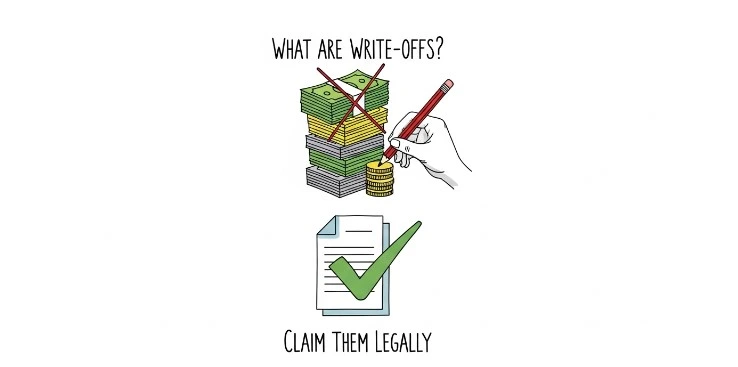
- Business write-offs allow companies to deduct eligible expenses from taxable income, helping reduce overall tax liability when claimed correctly and legally.
- Common write-offs include operating expenses, office costs, travel, depreciation, and business-related professional services, provided they meet IRS requirements.
- Accurate bookkeeping and proper documentation are essential to support write-offs and avoid errors during tax preparation or audits.
- Incorrect or unsupported write-offs can lead to denied deductions, penalties, or increased scrutiny from tax authorities.
- JMAccountingServices helps businesses identify allowable write-offs, maintain compliant records, and claim deductions legally while maximizing tax efficiency.
What Are Write-Offs and How Can Businesses Claim Them Legally?
Business write-offs are legitimate tools that reduce taxable income when handled with accurate records and compliance-focused practices, and this article explains what write-offs are and how they function within U.S. tax rules. The discussion clarifies core definitions, demonstrates how deductions affect taxable income, and highlights documentation standards that align with IRS expectations and Google’s Search Quality Rater Guidelines for accuracy, transparency, and trustworthiness. Small and mid-sized companies, such as startups and e-commerce businesses, benefit from understanding eligible expenses, substantiation requirements, and timing considerations. Evidence from industry surveys and professional journals supports the explanations, while practical examples illustrate compliant use. Businesses seeking execution support can engage skilled professionals through JMAccountingServices to ensure deductions are claimed correctly and consistently.
What Are Business Write-Offs?
Business write-offs are allowable deductions that reduce a company’s taxable income by subtracting ordinary and necessary expenses incurred during operations, as defined by the Internal Revenue Code. Common categories include operating costs, such as rent for office space, utilities for commercial locations, and software subscriptions; labor-related costs, such as wages, payroll taxes, and benefits; and asset-related deductions, such as depreciation on equipment and amortization of certain intangibles. Many companies, such as professional services firms and online retailers, rely on write-offs to reflect true operating profitability rather than gross receipts. A CPA Journal review notes that accurate categorization and substantiation improve audit defensibility and reporting quality. The statement stands that write-offs must be directly connected to business activity, then the condition applies that personal expenses do not qualify even when paid from a business account. Proper records include invoices, receipts, contracts, and payment proofs retained according to IRS guidance.
How Do Business Write-Offs Work to Reduce Taxable Income?
Business write-offs work by lowering taxable income through subtracting qualifying expenses from gross income, which reduces the base on which taxes are calculated. The mechanics follow a clear sequence: 1) identify gross income from sales or services, 2) subtract cost of goods sold where applicable, and 3) deduct ordinary and necessary expenses to arrive at taxable income. For example, many companies, such as SaaS startups and consulting practices, deduct cloud software fees, professional insurance, and marketing spend; a QuickBooks survey reports that small businesses that track expenses weekly report fewer filing errors and faster close times. The statement confirms that deductions reduce taxable income, then the condition applies that the expense must be substantiated and properly timed within the tax year. Evidence from IRS statistics shows depreciation elections and Section 179 expensing can materially affect cash flow when used correctly. For implementation accuracy and compliance confidence, businesses can hire an accounting or bookkeeping expert through JMAccountingServices to align documentation, elections, and reporting with current standards.
What Makes a Business Expense Eligible for a Write-Off?
A business expense is eligible for a write-off when it meets the IRS standard of being ordinary and necessary for carrying on a trade or business. An ordinary expense is common and accepted in a specific industry, while a necessary expense is helpful and appropriate for business operations, according to IRS guidance and CPA Journal analysis. Many companies, such as marketing agencies and construction firms, routinely deduct expenses like advertising fees, tools, and professional services because these costs directly support revenue generation. The statement is that eligibility depends on business purpose, then the condition is that the expense must be reasonable in amount and properly documented. Research from accounting compliance studies shows that expenses supported by dated receipts, clear vendor descriptions, and payment records have significantly lower audit risk. Personal expenses, even when partially related to business, fail eligibility standards without clear allocation and substantiation.
What Are the Most Common Business Tax Write-Offs?
The most common business tax write-offs are recurring operational expenses that businesses incur as part of daily activity and can substantiate under tax law. These expenses include payroll and contractor payments, office rent, utilities, insurance premiums, software subscriptions, and professional services fees. Many companies, such as retail stores and online service providers, deduct marketing costs like digital advertising, website hosting, and branding expenses because these costs are directly tied to customer acquisition. The statement confirms that common write-offs reflect routine operations, then the condition applies that each expense must be directly connected to business activity. Industry data from QuickBooks small business reports indicates that operating expenses account for a majority of total deductions claimed by small enterprises each year, reinforcing the importance of consistent categorization and recordkeeping across reporting periods.
How Can Businesses Claim Home Office Deductions as Write-Offs?
Businesses can claim home office deductions by demonstrating that a specific portion of a residence is used regularly and exclusively for business purposes. The deduction applies to a defined area, such as a dedicated room or clearly measured workspace, and allows allocation of expenses like rent, mortgage interest, utilities, and internet service. Many companies, such as freelancers and remote consultants, use square footage calculations to determine the deductible percentage of shared household costs. The statement establishes that exclusive business use qualifies the space, then the condition requires consistent use throughout the tax year. IRS data and university accounting studies show that clearly documented floor plans, utility bills, and usage logs significantly reduce disputes during reviews. Businesses often rely on professional guidance through JMAccountingServices to ensure accurate calculations and compliant reporting.
What Vehicle Expenses Can Businesses Write Off Legally?
Vehicle expenses that can be written off legally include costs directly related to business use of a car, truck, or van, calculated under either the standard mileage method or the actual expense method. Deductible costs may include fuel, maintenance, repairs, insurance, registration fees, and depreciation when using the actual expense approach. Many companies, such as delivery services and real estate professionals, track mileage logs to substantiate business travel between job sites, client meetings, and supply locations. The statement is that business-use mileage qualifies for deductions, then the condition is that personal miles must be excluded from calculations. IRS transportation studies indicate that contemporaneous mileage records, including dates, destinations, and purpose, are the strongest evidence for vehicle write-offs. Professional bookkeeping support through JMAccountingServices helps maintain compliant logs and method consistency year over year.
How to Implement Write-Offs in Accounting?
Write-offs are implemented in accounting by recording eligible expenses accurately, categorizing them consistently, and reconciling records with financial statements on a regular schedule. The process begins with capturing source documents, posting transactions to the correct expense accounts, and applying accrual or cash-basis rules consistently across periods. Many companies, such as manufacturing businesses and digital agencies, implement write-offs by aligning chart-of-accounts structures with tax categories to reduce reclassification at year-end. The statement confirms that implementation relies on systematic recording, then the condition is that accounting methods must remain consistent to meet IRS and GAAP expectations. Research published in the CPA Journal indicates that businesses performing monthly reconciliations experience fewer filing adjustments and improved audit outcomes. Skilled professionals can be engaged through JMAccountingServices to set up workflows that maintain accuracy from transaction entry through tax reporting.
What Documentation Is Required for Claiming Business Write-Offs?
Documentation required for claiming business write-offs includes records that prove the expense amount, business purpose, date, and payment method. Acceptable documentation includes invoices, receipts, canceled checks, bank statements, contracts, and mileage logs for transportation deductions. Many companies, such as consulting firms and wholesale distributors, maintain digital copies organized by vendor and tax year to support faster retrieval during reviews. The statement establishes that documentation substantiates eligibility, then the condition requires that records be retained for the IRS-recommended period, typically several years after filing. IRS compliance reports show that missing receipts and unclear business purpose explanations account for a high percentage of disallowed deductions, emphasizing the value of detailed descriptions and contemporaneous recordkeeping.
What Are Frequent Mistakes When Claiming Business Write-Offs?
Frequent mistakes include misclassifying personal expenses as business costs, failing to allocate mixed-use expenses correctly, and claiming deductions without sufficient documentation. Many companies, such as sole proprietorships and early-stage startups, overstate deductions by estimating expenses rather than relying on verifiable records. The statement is that errors increase audit risk, then the condition is that inconsistent categorization and incomplete logs trigger scrutiny. Studies cited in accounting oversight reviews indicate that inaccurate mileage tracking and improper home office claims are among the most common reasons deductions are reduced or denied. Consistent processes and professional oversight through JMAccountingServices help businesses avoid these errors and maintain compliant, defensible tax positions.
How Does the IRS Audit Business Write-Off Claims?
The IRS audits business write-off claims by reviewing whether deductions are ordinary, necessary, accurately calculated, and supported by proper documentation. The process typically begins with a correspondence or field audit where examiners request records such as receipts, bank statements, mileage logs, and accounting reports tied to specific deductions. Many businesses, such as sole proprietorships and closely held companies, face closer review when deductions appear disproportionate to reported income. The statement is that audits focus on substantiation and consistency, then the condition is that red flags, such as large home office deductions or unusually high vehicle expenses, increase scrutiny. IRS data and Treasury Inspector General reports show that expenses lacking contemporaneous records are far more likely to be disallowed, reinforcing the importance of organized documentation and consistent accounting practices.
What Percentage of Businesses Maximize Their Tax Write-Offs?
No, most businesses do not fully maximize their tax write-offs according to available research and industry surveys. A QuickBooks small business survey found that fewer than half of small businesses feel confident they are claiming all eligible deductions, with estimates ranging between 30% and 40% reporting full optimization. Many companies, such as startups and owner-operated service businesses, underclaim deductions due to limited tax knowledge or inconsistent recordkeeping. The statement confirms that underutilization is common, then the condition is that complexity of tax rules and lack of professional support contribute to missed opportunities. Academic studies from accounting programs at U.S. universities indicate that businesses using structured bookkeeping systems and professional review capture a higher percentage of allowable write-offs year over year.
Where to Hire an Expert to Handle Write-Offs?
Skilled professionals can be found through JMAccountingServices for businesses seeking accurate, compliant, and strategic handling of write-offs. These experts assist with expense classification, documentation standards, and audit-ready reporting aligned with IRS expectations. Many companies, such as growing e-commerce brands and professional practices, rely on expert support to maintain consistency across accounting periods and avoid costly errors. The statement is that expert guidance improves compliance and optimization, then the condition is that ongoing oversight is required as tax rules and business operations change. Engaging qualified support ensures write-offs are implemented correctly, documented thoroughly, and defended confidently when reviewed.