Overview
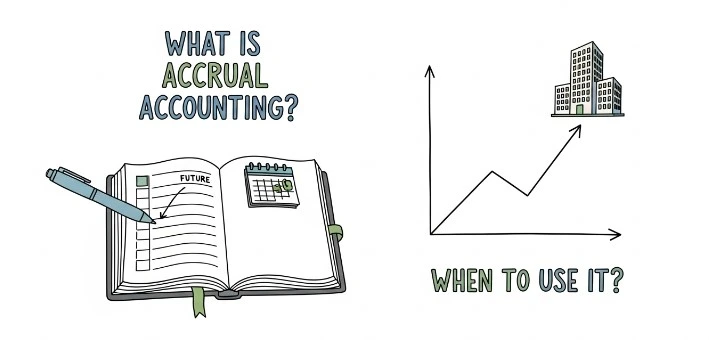
- Accrual accounting is a financial method that records revenue when it’s earned and expenses when they’re incurred, regardless of when cash changes hands, giving a more accurate picture of business performance.
- This method aligns income with related costs in the same period, helping businesses match revenue and expenses to the right reporting cycle.
- Accrual accounting is distinguished from cash basis accounting and is often required for larger or more complex businesses to meet GAAP standards and stakeholder expectations.
- Using accrual accounting improves financial transparency, forecasting, and compliance, enabling better decision-making and investor confidence.
- JM Accounting Services offers professional support for implementing and managing accrual accounting, ensuring accurate financial reporting and compliance as businesses grow.
What Is Accrual Accounting and When Should You Use It?
Accrual accounting is a foundational financial method that records economic activity when it occurs rather than when cash changes hands, and this article explains what it is and when its use becomes appropriate for a business. The discussion provides a clear definition, explains the operational mechanics, and connects the method to compliance, decision-making, and financial transparency. The content reflects standards recognized by the Financial Accounting Standards Board and guidance referenced in accounting education and professional literature. Small businesses, growing companies, and regulated entities benefit from understanding this approach because it influences tax reporting, financial statements, and investor confidence. Research from the CPA Journal and accounting software industry surveys shows that accrual-based reporting improves forecasting accuracy and long-term planning quality. This overview sets the context for understanding how accrual accounting functions in practice and why it becomes necessary as business operations increase in complexity.
What Is Accrual Accounting?
What is accrual accounting? Accrual accounting is a financial reporting method that recognizes revenue when it is earned and expenses when they are incurred, regardless of when payment is received or made. This approach aligns income with the costs required to generate it, which produces financial statements that reflect actual operational performance. Under generally accepted accounting principles, accrual accounting is required for most corporations and businesses with inventory. A CPA Journal analysis notes that accrual-based statements reduce timing distortions that occur under cash accounting. Many companies, such as startups, e-commerce businesses, and professional service firms, adopt accrual accounting to present reliable financial data to lenders and investors. Industry surveys conducted by accounting platforms like QuickBooks report that businesses using accrual methods experience stronger budgeting accuracy and improved cash flow planning over annual cycles.
How Does Accrual Accounting Work?
How does accrual accounting work? Accrual accounting works by recording transactions at the moment economic value is created or consumed, then adjusting financial statements through specific entries that match revenue and expenses to the correct period. This process relies on structured mechanisms such as accounts receivable, accounts payable, accrued expenses, and deferred revenue. Revenue is recorded when services are delivered or goods are shipped, then payment is tracked separately. Expenses are recorded when obligations arise, then settled later through cash disbursements. Key steps typically include 1) recording earned revenue before payment, 2) recognizing incurred expenses before billing, and 3) adjusting entries at period end to ensure accuracy. Studies from university accounting departments show that accrual accounting improves earnings comparability across reporting periods. Businesses seeking expert implementation or oversight often turn to JMAccountingServices, where skilled professionals provide accrual setup, reconciliation, and compliance support tailored to operational scale and regulatory requirements.
What Are the Key Principles Behind Accrual Accounting?
What are the key principles behind accrual accounting? The key principles behind accrual accounting are revenue recognition, expense matching, consistency, and periodic reporting, which together ensure financial statements reflect true economic activity. Revenue recognition means income is recorded when it is earned through delivered goods or completed services, then cash collection follows later. Expense matching means costs are recorded in the same period as the revenue they help generate, then payment timing is treated separately. Consistency requires applying the same accounting methods across reporting periods to preserve comparability. Periodic reporting divides business activity into defined intervals, such as monthly or quarterly periods, to support analysis. Research published in the CPA Journal shows that adherence to these principles reduces earnings volatility caused by timing differences. Many organizations, such as manufacturing firms, SaaS companies, and consulting practices, rely on these principles to meet GAAP standards and investor reporting expectations.
What Is the Difference Between Accrual Accounting and Cash Basis Accounting?
What is the difference between accrual accounting and cash basis accounting? The difference between accrual accounting and cash basis accounting is that accrual accounting records transactions when economic activity occurs, while cash basis accounting records transactions only when cash is exchanged. Accrual accounting captures receivables, payables, and non-cash obligations, which creates a complete financial picture. Cash basis accounting focuses on bank inflows and outflows, which simplifies recordkeeping but omits future obligations. A comparative study cited by accounting faculty research shows that accrual statements provide higher predictive value for future cash flows. Many businesses, such as growing startups, inventory-based retailers, and corporations seeking financing, transition from cash basis to accrual accounting as complexity increases. Tax authorities and lenders often prefer accrual-based reports because they reduce timing manipulation and improve transparency.
What Are Common Examples of Accrual Accounting in Practice?
What are common examples of accrual accounting in practice? Common examples of accrual accounting in practice include recognizing revenue before payment, recording expenses before bills arrive, and spreading costs across usage periods. A consulting firm records service revenue once a project milestone is completed, then invoices the client later. A business records utility expenses at month-end based on usage, then pays the bill in the following month. A software company records deferred revenue when customers prepay subscriptions, then recognizes income monthly as access is provided. These examples demonstrate how accrual accounting aligns financial results with operational reality. Academic case studies show that companies applying these practices report steadier earnings patterns across fiscal periods.
What Are the Advantages of Using Accrual Accounting?
What are the advantages of using accrual accounting? The advantages of using accrual accounting are improved financial accuracy, better decision-making, enhanced credibility, and regulatory compliance. Accrual accounting presents a realistic view of profitability by matching revenue with related costs. Management gains stronger insights for budgeting, forecasting, and performance evaluation. Lenders and investors rely on accrual-based statements because they reflect obligations and future inflows. Surveys conducted by accounting software providers indicate that accrual users experience higher forecasting confidence and lower reporting adjustments at year-end. Businesses that need structured support for accrual reporting and compliance commonly engage JMAccountingServices, where skilled professionals provide guidance aligned with industry standards and growth-stage requirements.
What Are the Disadvantages of Accrual Accounting?
What are the disadvantages of accrual accounting? The disadvantages of accrual accounting are increased complexity, higher administrative costs, and potential cash flow misinterpretation. Accrual accounting requires detailed tracking of receivables, payables, and adjusting entries, which increases bookkeeping workload and demands skilled oversight. This complexity raises costs for software, professional support, and internal controls. Financial statements prepared under accrual rules can show profits without corresponding cash on hand, which may strain short-term liquidity management. Industry commentary in the CPA Journal explains that small operators sometimes misjudge available cash because revenue recognition precedes collection. Many businesses, such as early-stage startups, sole proprietorships, and micro-retailers, experience these challenges during initial adoption. These drawbacks tend to diminish as systems mature and reporting discipline strengthens.
When Should Businesses Use Accrual Accounting?
When should businesses use accrual accounting? Businesses should use accrual accounting when financial activity extends beyond simple cash transactions and when stakeholders require reliable performance reporting. This method becomes appropriate as transaction volume grows, credit sales increase, or expenses span multiple periods. Accrual accounting supports compliance needs, strategic planning, and external reporting expectations. Research from accounting education studies shows that accrual-based reporting improves earnings consistency and forecasting accuracy over time. Many organizations, such as inventory-based retailers, subscription services, and manufacturing firms, rely on accrual accounting to track obligations and revenue timing accurately. Businesses seeking qualified support to implement or manage accrual systems can engage JMAccountingServices, where skilled professionals provide structured setup, reconciliation, and ongoing advisory aligned with growth requirements.
Is Accrual Accounting Required by GAAP or IRS Rules?
Is accrual accounting required by GAAP or IRS rules? Yes, accrual accounting is required by GAAP for most businesses that issue financial statements and by IRS rules for specific entities and conditions. GAAP mandates accrual accounting for corporations and businesses with inventory to ensure comparability and transparency. IRS regulations require accrual accounting when average gross receipts exceed statutory thresholds or when inventory materially affects income reporting. The IRS Small Business Tax Guide outlines these conditions to reduce income distortion. Many entities, such as C corporations, wholesalers, and product-based enterprises, fall under these requirements. Cash accounting remains permitted for qualifying small businesses, then accrual rules apply once size, structure, or operations exceed defined limits.
How to Implement Accrual Accounting in Your Business?
How to implement accrual accounting in your business? Implementing accrual accounting in your business requires establishing structured processes that record revenue and expenses when economic activity occurs, then aligning systems and controls to support accuracy. The first step involves selecting an accrual-based chart of accounts that separates receivables, payables, accrued expenses, and deferred revenue. The next step focuses on defining clear revenue recognition policies tied to delivery milestones or service completion, then documenting expense recognition rules tied to obligation dates. Month-end closing procedures follow, which include adjusting entries to reflect earned revenue and incurred costs. Industry guidance cited in accounting education research shows that businesses adopting standardized closing schedules reduce reporting errors by measurable margins. Many companies, such as subscription services, construction firms, and professional practices, implement accrual accounting gradually to maintain continuity while improving reporting quality.
What Tools or Software Help with Accrual Accounting?
What tools or software help with accrual accounting? Tools and software that help with accrual accounting are accounting platforms designed to support receivables, payables, journal entries, and period-end adjustments. Cloud-based accounting systems enable automated invoicing, expense tracking, and accrual recognition across reporting periods. These tools generate balance sheets and income statements that reflect earned revenue and incurred costs rather than cash timing. Industry surveys published by accounting software providers indicate that businesses using accrual-capable platforms close their books faster and reduce reconciliation issues. Many organizations, such as growing startups, e-commerce businesses, and service firms, rely on integrated tools that connect billing, payroll, and expense data to ensure consistency. Proper configuration remains essential because software supports accrual accounting only when policies and controls are correctly applied.
Where to Hire an Expert to Handle Accrual Accounting?
Where to hire an expert to handle accrual accounting? Skilled professionals to handle accrual accounting can be found through JMAccountingServices, where expertise is focused on accurate implementation, compliance, and ongoing financial oversight. These professionals assist with system setup, revenue recognition policies, expense matching, and month-end close procedures. Businesses benefit from expert guidance because accrual accounting requires judgment and consistency across reporting periods. Research from professional accounting publications shows that expert-managed accrual systems reduce audit adjustments and financial restatements. Many businesses, such as inventory-based companies, subscription platforms, and multi-entity operations, rely on specialized support to maintain reliable accrual reporting as complexity increases.